Press kit · updated 4 August 2026
Uncloud is a private AI journal, built by one developer. Everything a writer or editor needs is on this page: the factsheet, the screenshots, the founder story, and — because it’s the actual story — a plain list of the claims we won’t make.
The angle
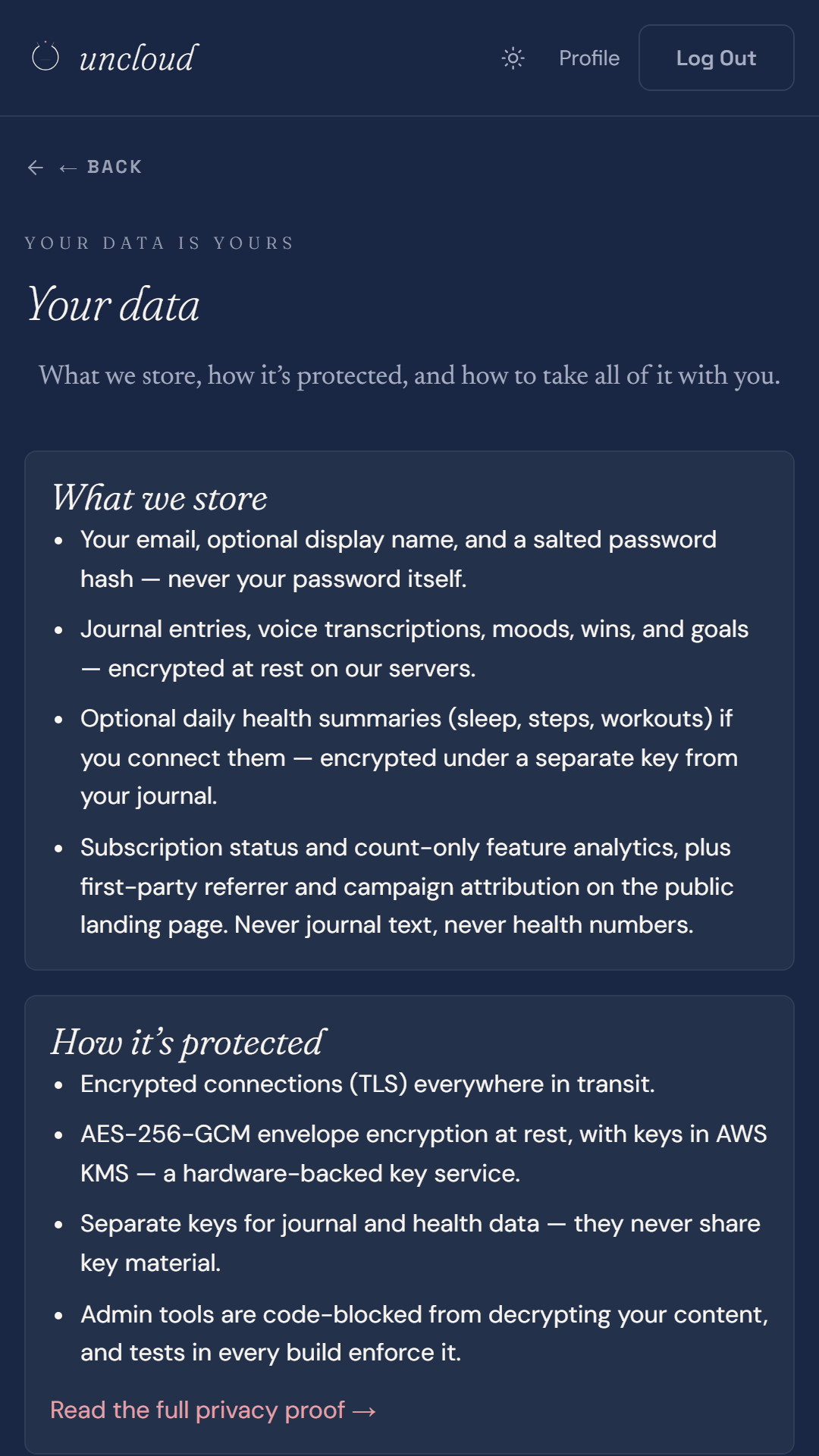
Uncloud is built so the promise is checkable. Entries are envelope-encrypted with AES-256-GCM under hardware-backed keys. Our own admin tooling is blocked, in code, from reading them — and that block is enforced by automated architecture tests that fail the build if anyone removes it. Not a policy page. A failing test.
The same standard applies to the AI, which is where it gets uncomfortable. Uncloud’s value is a model reading across months of your entries to find patterns you can’t see from inside. That means the model sees your words. We could have crippled the AI to avoid that, or advertised a stronger guarantee than we actually provide and quietly decrypted on the server the way some apps do. We did neither — we say so plainly, and contract for no model training.
That’s the story worth writing about: not another private journal, but one that publishes where its privacy stops.
The part nobody else prints
Every phrase below is common in this category and would help us sell. Each one is either false for our architecture or meaningless. If you see a competitor using them, the questions almost write themselves.
False for us, and we think for several apps that print it. The AI must read your entries to work. Keys exist server-side. Saying otherwise would be a lie told to sell a feature.
Same reason. We know your entries exist and could technically decrypt them — which is exactly why we blocked ourselves in code and made the block testable.
Uncloud isn’t a HIPAA-covered entity, so the phrase is legally meaningless here. The honest version is “voluntary HIPAA-level safeguards,” and that’s what we say.
Legally false for any service holding keys, ours included. A court order is a real limit on what we can protect, and pretending otherwise would be the worst kind of privacy marketing.
Marketing noise with no technical meaning. The specific, checkable version is AES-256-GCM envelope encryption with per-user keys — which tells you something the slogan doesn’t.
“I’d rather write the sentence about what we can’t protect myself than have a reporter find it.”
Andrew Ewing · founder, Tobala Software LLC
Factsheet
Boilerplate — copy freely
Uncloud is a private AI journal for iOS, Android, and the web, built by solo developer Andrew Ewing under Tobala Software LLC. It uses Claude to surface patterns across months of a person’s writing, while encrypting every entry and blocking its own admin tooling from reading them — a restriction enforced by automated tests rather than policy. Uncloud publicly declines the privacy claims common in its category — including the encryption guarantee most competitors advertise — on the grounds that the AI must read entries to work. It launched on Google Play in July 2026 and on the App Store later that month.
Founder story
Uncloud is the work of one person. There is no team, no funding round, and no growth department — which is the reason the privacy claims are narrow enough to be true. Nobody had to be talked out of a better-sounding phrase.
The architecture came first and the marketing had to live with it. When the honest description of the AI turned out to be inconvenient, the choice was to publish the inconvenience: an architecture page that states exactly what encryption does and doesn’t cover, including a court order and the developer’s own ability to change the code.
Andrew is available for interviews, technical questions about the threat model, and pointed questions about the trade-off. Email directly.
Downloadable assets
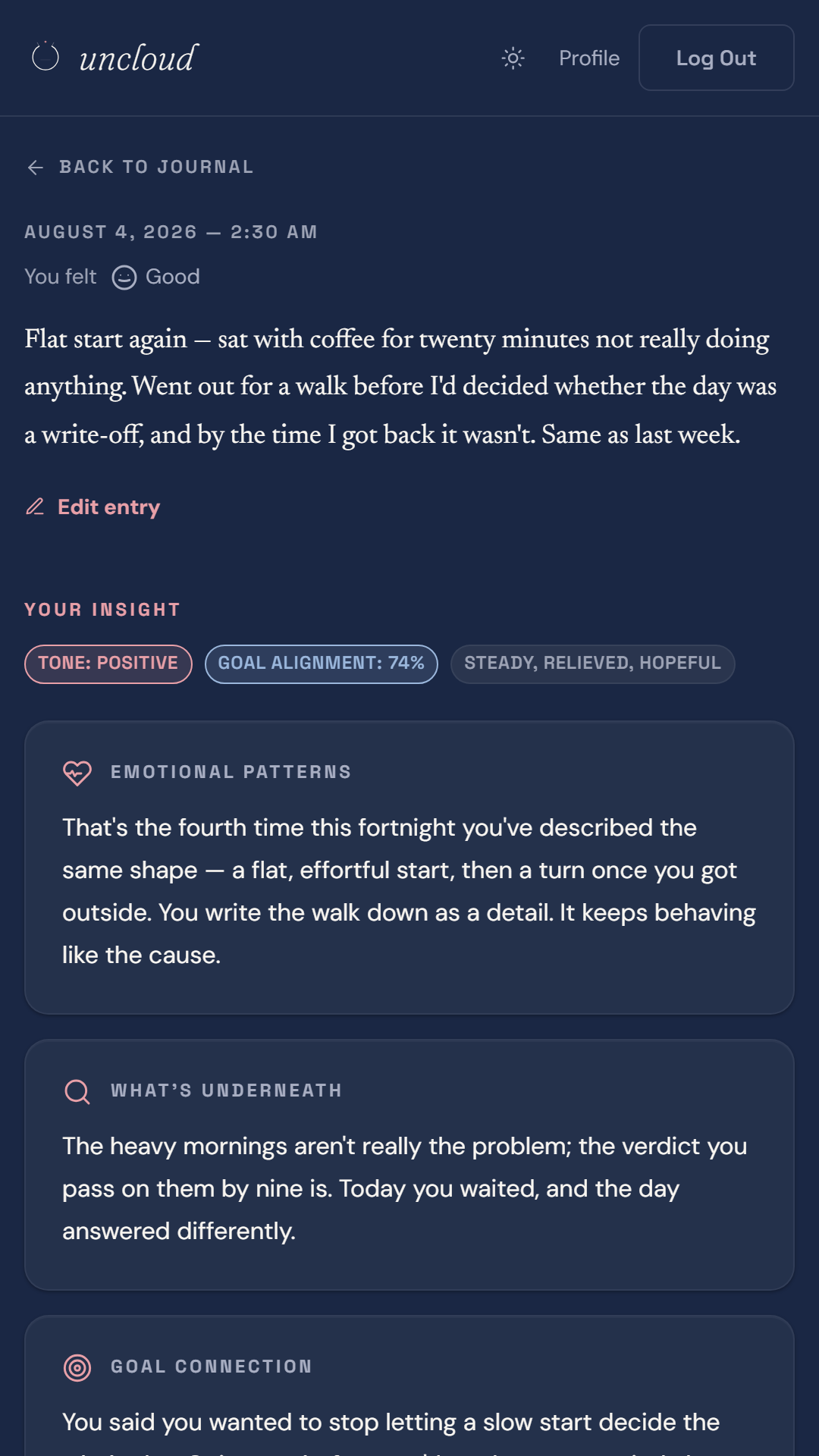
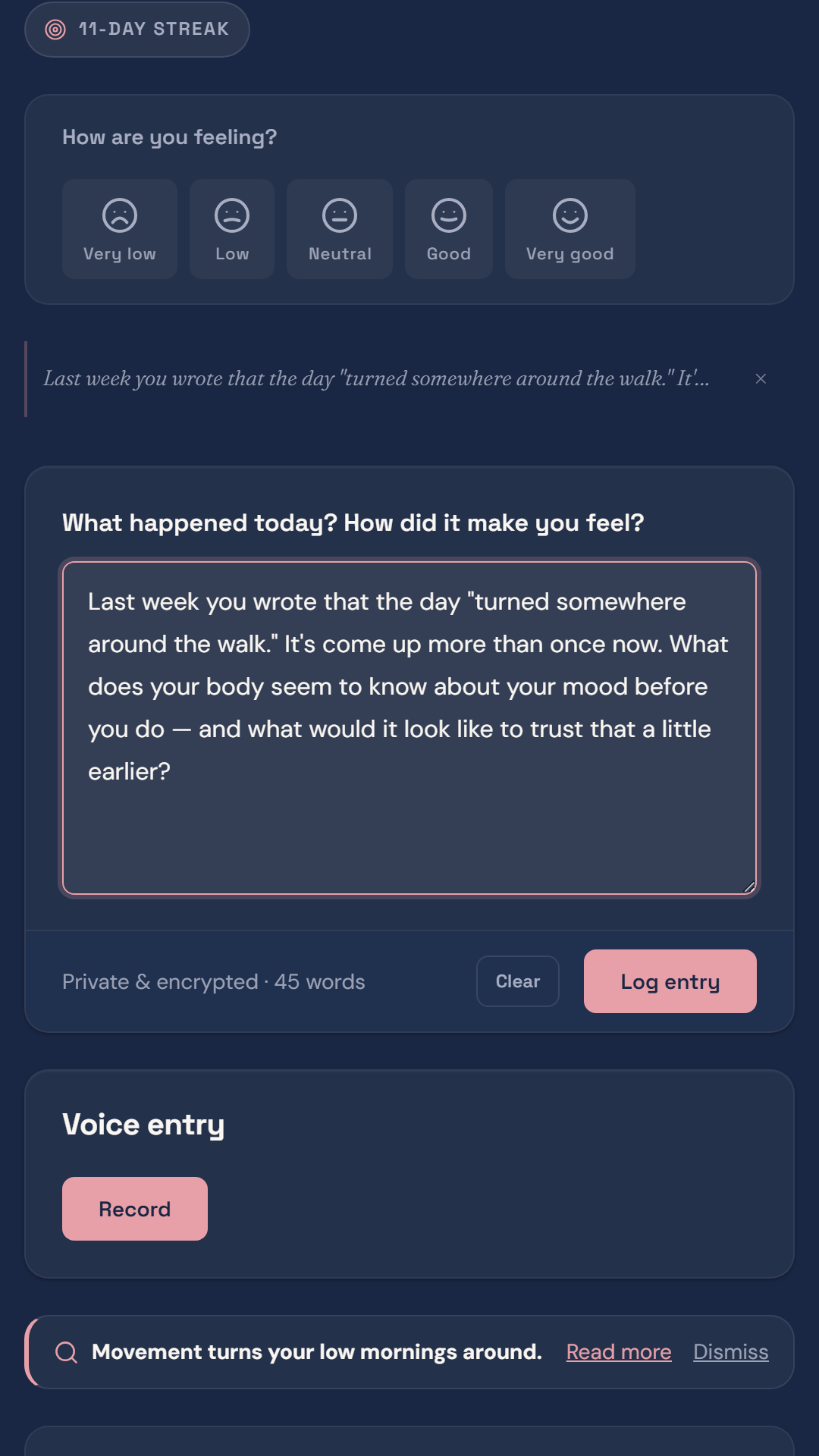
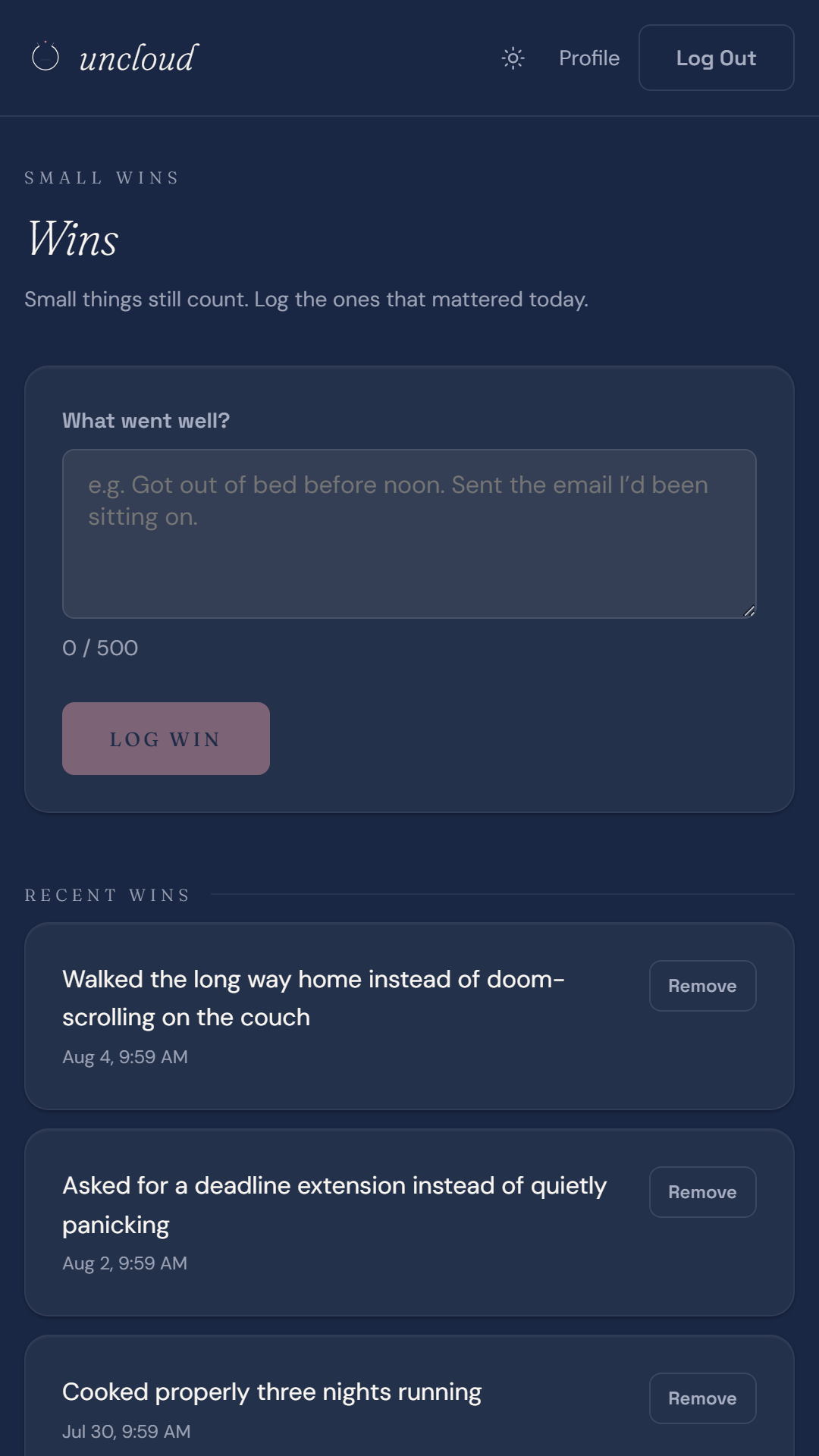
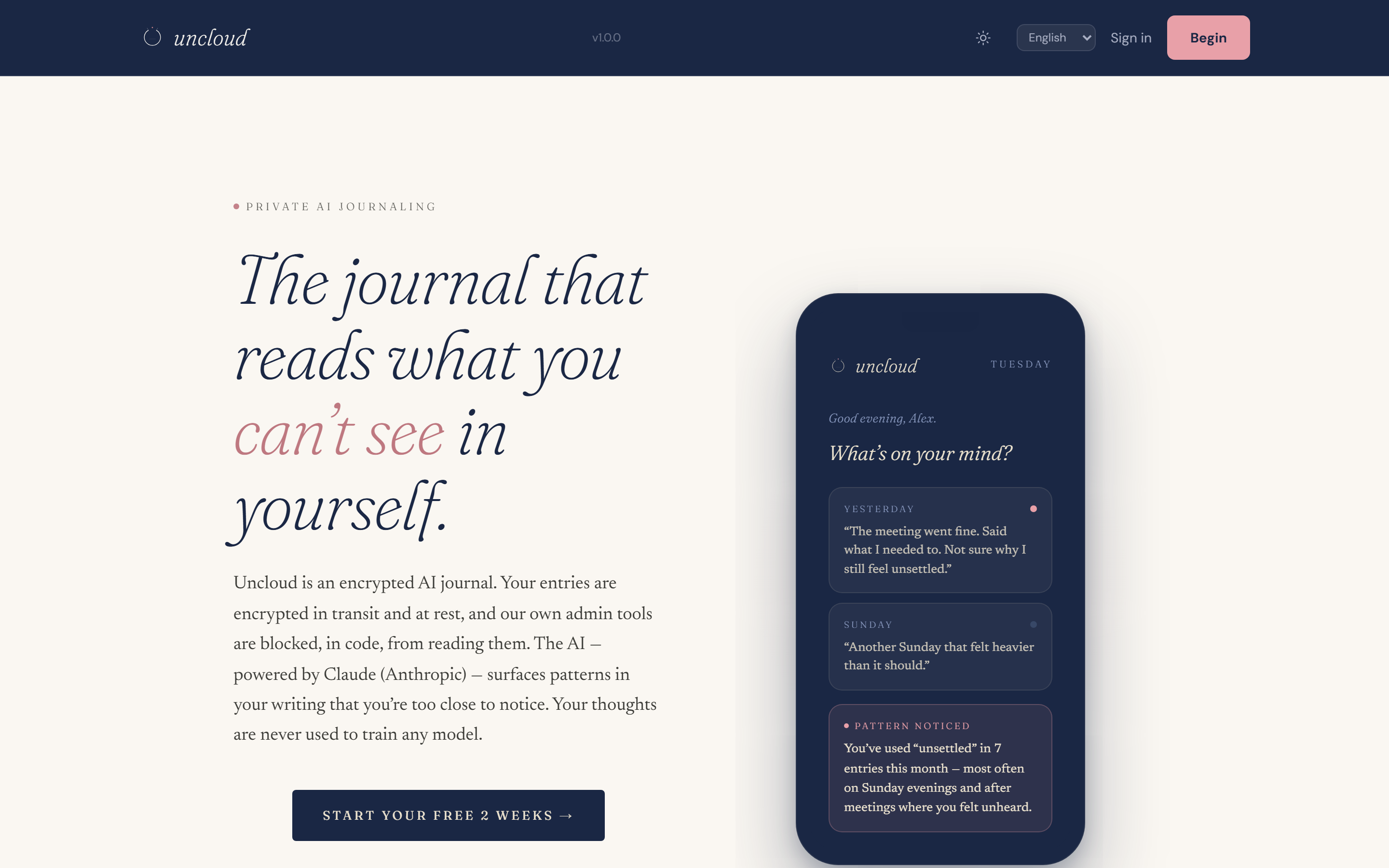
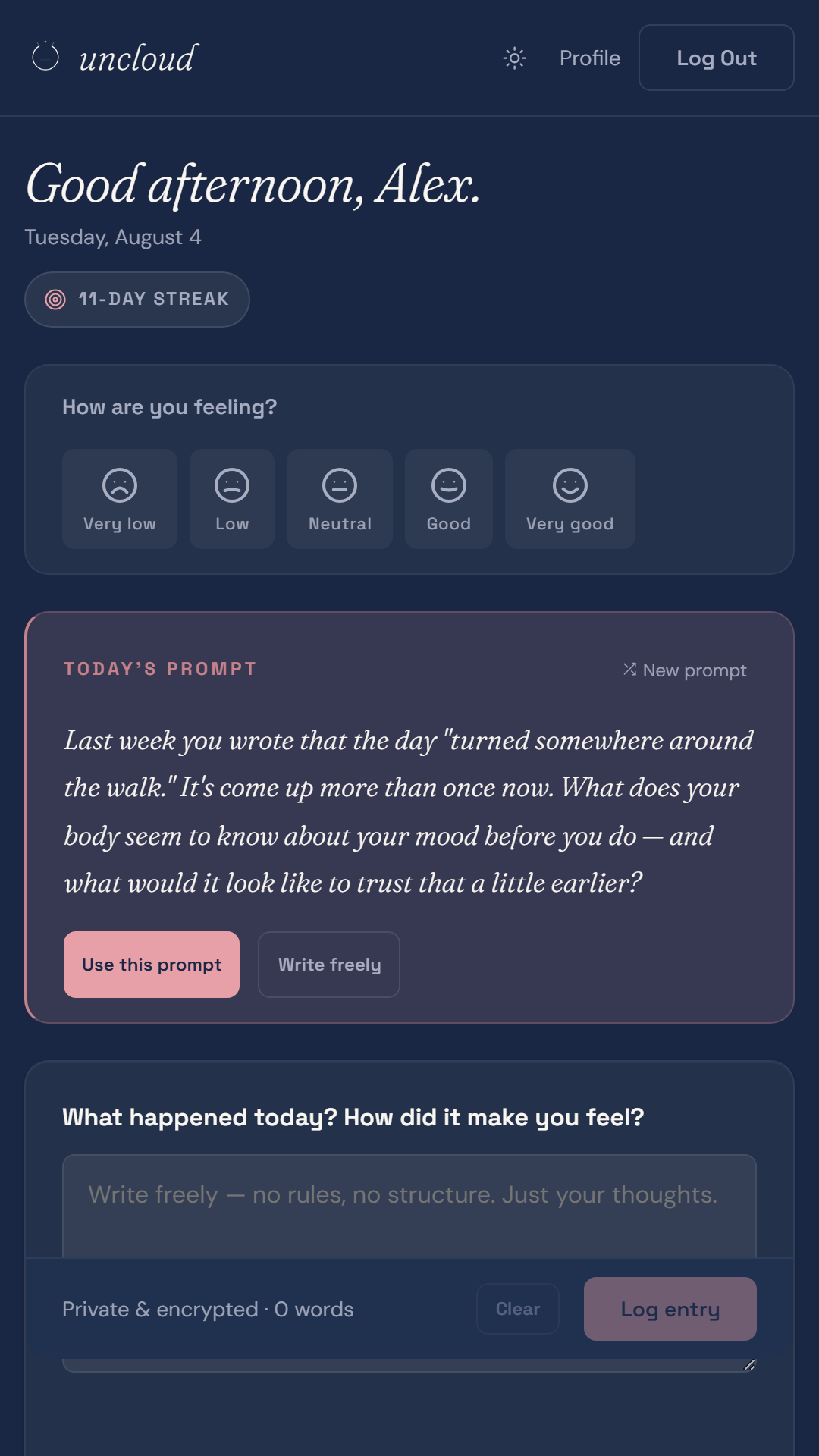
Free to use in coverage of Uncloud, no permission needed. Right-click to save, or use the download link under each image.
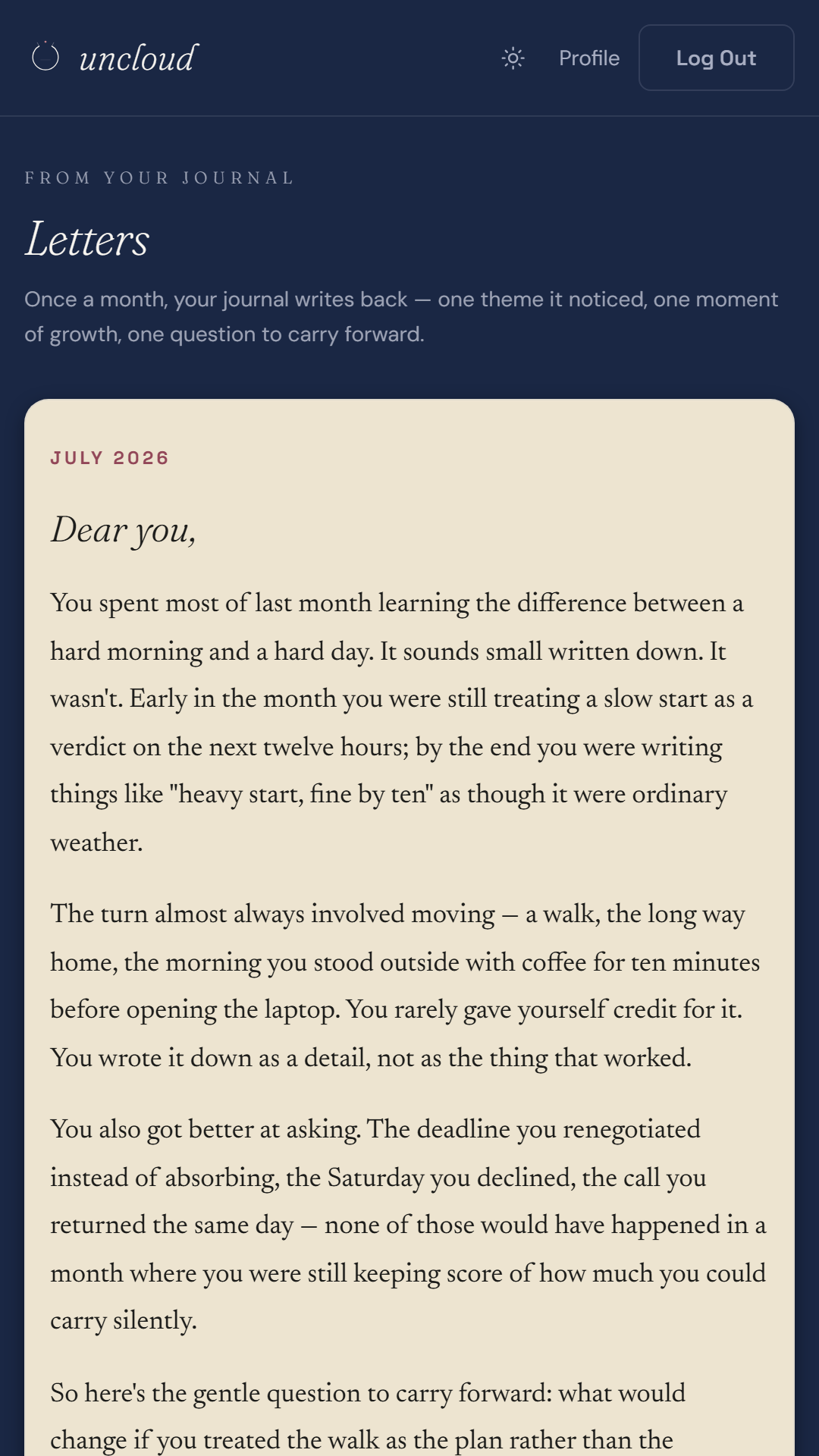
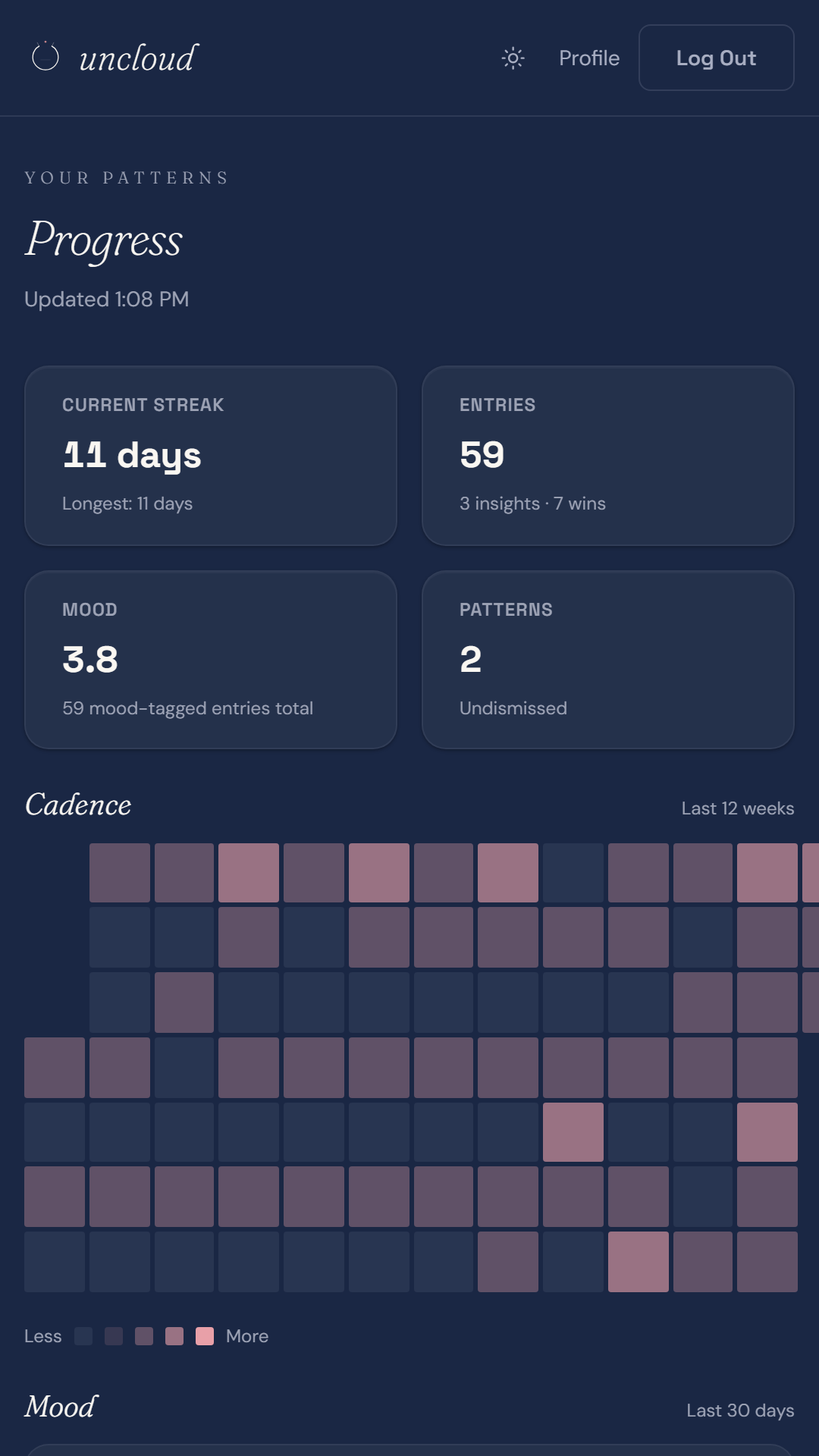
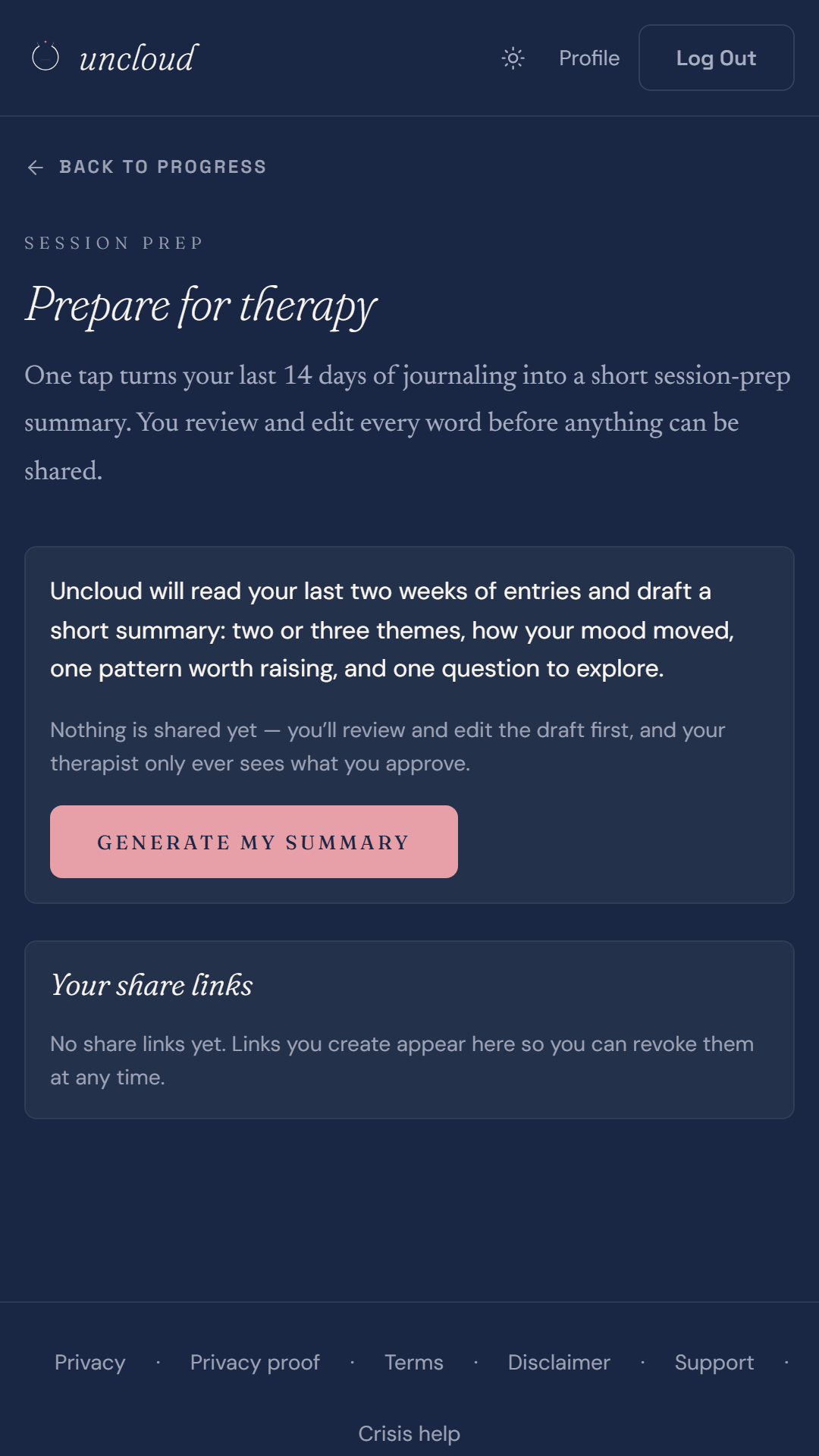
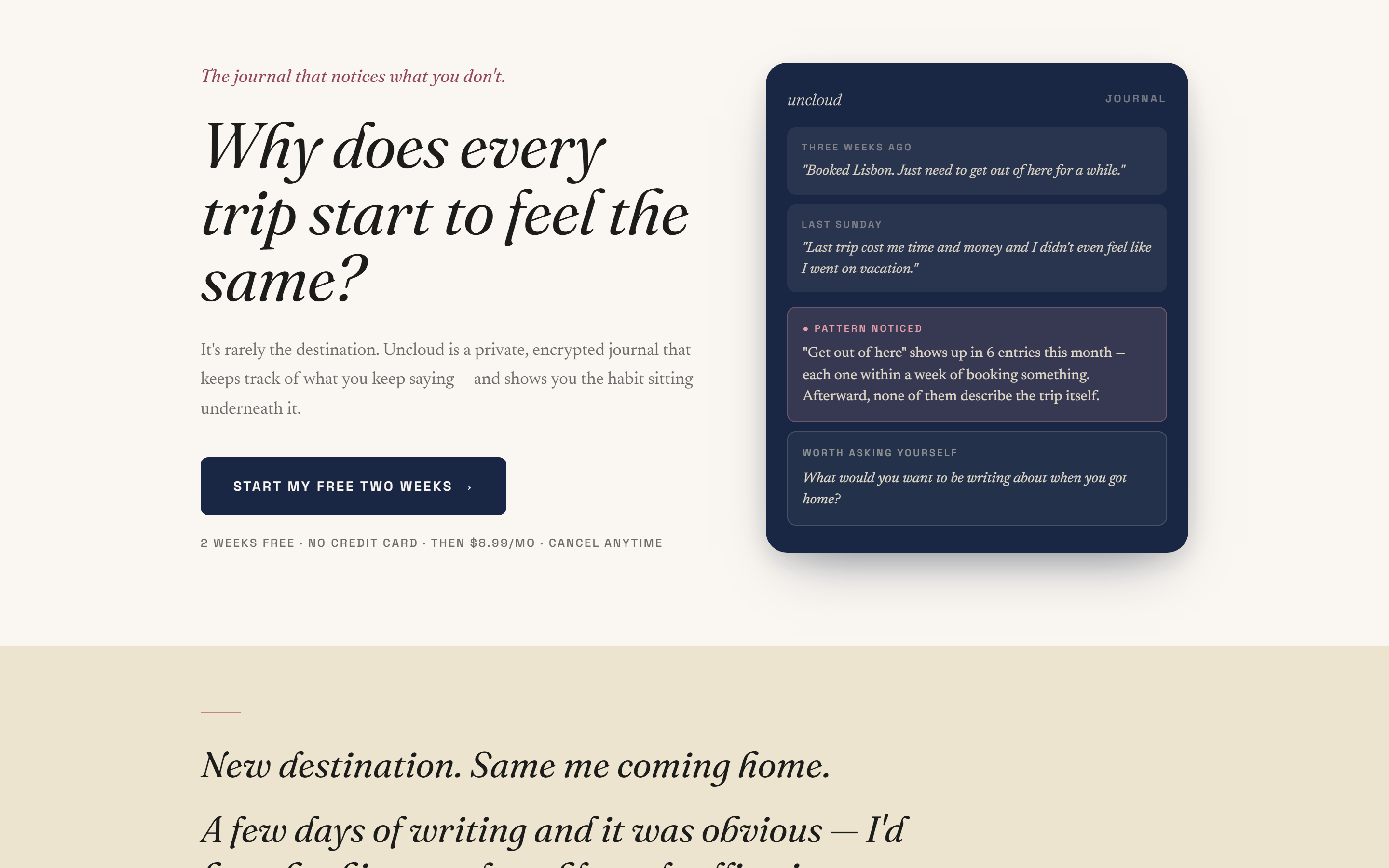
Uncloud runs as a full web app at uncloud.you, not just on phones. Captured from the live site.
512×512 PNG, transparent-safe on light and dark grounds. Download